
Gold Confiscation: Legal situation in the U.S.
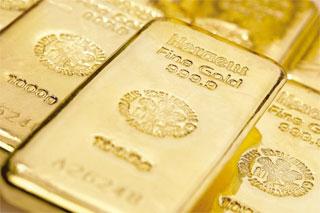
Gold ownership was made illegal on 1st May 1933. U.S. citizens, under Order 6102, were allowed to own up to $100 in gold coin [+5 ounces]. Today that would be worth under $8,400, a mere token gesture to real gold owners. It acted as a tiny escape valve to the general body of citizens and did not detract from the fact that effective gold ownership was abolished.
The privilege, not right, to own gold was restored to U.S. citizens on the 15th August 1974 not 1971, when Nixon floated the USD against gold and stopped foreign central banks from converting USD to gold).
Although private ownership of gold in the United States was legalized, the power to confiscate gold remains in the hands of the President. At no time during this century has the U.S. government recognized the right of private gold ownership. The Trading with the Enemy Act, which President Roosevelt invoked in 1933 to restrict private gold transactions, remains law. The President still retains the right, under the Emergency Banking Relief Act, to "investigate, regulate or prohibit...the importing, exporting, hoarding, melting or earmarking of gold" in times of a declared national emergency. It is highly unlikely that either the Courts or Congress would successfully argue that confiscatory powers are not implicit in the Emergency Banking Relief Act if a currency crisis or other fiscal emergency prompted the President to, once again, nationalize gold.
So it is essential to store gold in a country, where confiscation of gold is unlikely (Hong Kong, Dubai) or in a country you can reach easy and quick (like Panama) to decide what to do.
Gold prices will see a new "leap forward" latest in summer 2012.
Uncertainty over paper currencies (including the Dollar), like the risk of conflict, will feed a strong appetite for the yellow metal.
With the important April option contracts expiring next week, the shorts will probably try to keep the downward pressure on gold and silver. It will be an important show of strength if gold holds $1650 and silver holds $32.
So you should be prepared to purchase latest in two weeks. The hope for further significant price falls is a very risky speculation. A substantial price
increase can happen at any time.
Don´t try to be more intelligent than central banks (see article below).
REUTERS (Fri, Mar 16 2012)
Central banks snap up gold after price pressure
The fall in gold prices has prompted one or more central banks to buy as much as four tonnes of bullion in recent weeks, according to an industry source and a Financial Times report on Friday.
The purchases, worth about $250 million at current prices, were made through the Bank for International Settlements (BIS), a source familiar with the trades told Reuters. The identity of the buyers is not disclosed until the BIS has allocated the gold, although they are likely to be in Asia, where banks are keen to diversify their dollar-heavy foreign exchange reserves, the source told Reuters. The Philippines and Thailand were big buyers last year.
The FT said banks had bought between four and six tonnes in the over-the-counter physical market last week.
Citing several traders with knowledge of the transactions, it said purchases were particularly strong at the end of the week and the total over the past three or four weeks was likely to be as much as double that range.
A Credit Suisse note to clients this week referred to "aggressive central bank buying seen last Friday", the FT said.
ATTRACTIVE PRICES
The buying started when bullion dropped to levels considered "attractive", the source told Reuters. Banks are likely to step into the market again if prices fall further, he said. Bullion has fallen 8 percent since February 28, the day before prices saw their biggest one-day drop in more than three years, and are about 14 percent below their record highs of $1,920 per oz hit in September.
Even so, they are also well off the lows of $1,521 per oz seen in December last year. Central bank buying, led by emerging economies, has been a trend of the past several years. In 2011, central banks were net buyers for a second year in a row.
Their purchases soared to 439.7 tonnes last year from 77 tonnes, reflecting the need to diversify assets, reduce reliance on one or two foreign currencies, rebalance reserves and ultimately protect national wealth, according to the World Gold Council (WGC). This was the highest level since the end of the gold standard in 1971.
China's central bank is another major buyer, although it tends to purchase gold from its domestic market, the source told Reuters.
Gold's allure to emerging nations contrasts with the attitude of Western banks, which have previously been sellers of their gold reserves. That selling has all but stopped. The BIS declined to comment, the paper said.
Gold has been under pressure since the Federal Reserve upgraded its U.S. economic outlook and dashed hopes of further quantitative easing earlier this week.
The precious metal, which was at $1,660 per oz late on Friday in New York, has erased gains made since late January when the Fed said it would keep interest rates for the next several years.
The latest selling has also removed the premium bullion enjoyed based on expectations of further U.S. monetary easing to stimulate the economy.


