
Why Gold? Why Now?
Gold is Money
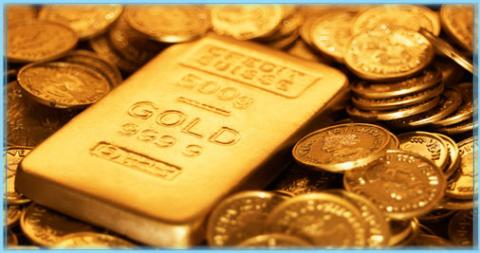
No other form of money comes close to gold's longevity or worldwide appeal. Regardless of the era or the culture, every form of gold—from gold nuggets to gold coins, gold bars, gold jewelry, even gold teeth—has commanded universal respect and buying power for more than 2,700 years.
Gold is More than Money
Throughout history, people have found gold to be so beautiful, enduring, and rare that gold has transcended mere currency. Lovers seal their vows with gold rings. Kings and queens still wear gold crowns. Olympic winners still receive gold medals (although no longer solid gold). And a gold watch still symbolizes respect and accomplishment at retirement. Even our language continues to recognize the special status of gold with phrases like our "golden moment" and his word is "as good as gold." Over the long haul of history, no other worldly substance has achieved and retained such a high universal regard as gold. To say that this precious metal has staying power is an understatement!
Paper Money was a Great Invention… with One Giant Flaw
The invention of paper money was a breakthrough in the advancement of civilization. Paper money greatly boosted trade and solved many problems that gold could not: it's portable (you can carry a lot of it in your pocket), it's printable (governments can make more as needed to keep up with their growing economies), and it's even electronic (highly convenient for large transactions and global trade).
But paper money has one giant flaw. It turns out that one of the things that make paper money so good for growing an economy eventually becomes a big reason why most economies throughout history eventually fail: Printing too much of it.
Printing Too Much Money Causes Inflation
As long as governments print just the right amount of paper money to keep up with the size and growth of their economies, all is well. However, time and again throughout history, economic and political stressors eventually tempt governments to print paper money faster than their economies are growing. At first, the idea is just to stimulate their economies with a little extra money and then stop printing. But the short term benefits of money printing are so appealing and seductive that nearly every country throughout history eventually prints too much paper money, at a rate much faster than their economies were growing, damaging—and in many cases, even destroying—their economies.
Think about it: how much money would you print to boost your own personal economy if you had your own personal printing press? Would you stop at just a little? Maybe at first, but eventually you might let yourself print a little more. It's just human nature to get carried away with an easy short-term solution to larger long-term problems.
Massive Money Printing around the Globe
In response to the popping real estate bubble, stock market crash, and global financial crisis of 2008, the US Federal Reserve has been printing massive amounts of new money to pull us out of and keep us out of recession. In fact, the Fed has now printed five times more money in the last five years than it printed in all of the last 100 years. That's a whole lot of new money!
And we aren't the only ones on a money-printing binge. All over the world, central banks of many other countries are massively printing money to fight recession in their own economies, although not as fast as we are printing.
Without this massive stimulus in the US, we would not have enjoyed the current economic recovery or the recent rebounds in the stock and real estate markets. However, increasing our monetary base by 400 percent in just five years comes with a big future price tag: future inflation.
Massive Money Printing Causes Future Inflation
Inflation simply means that things cost more because the dollar buys less. The dollar buys less because there are too many dollars chasing the available goods and services, which drives up prices. So far, inflation in the US is still quite low and is not going to happen overnight.
However, over time, too much money printing eventually does lead to inflation. Even the Federal Reserve's own research of 116 countries over many decades shows this to
be true. Increasing the money supply beyond what is need to keep up with economic growth eventually causes inflation. How much inflation? About the same amount of inflation as the money supply was increased. In other words, if we increase the money supply by 10 percent beyond what is needed to keep up with the growth of the economy, then we eventually get about 10 percent future inflation. In the 1980s, we had about 14 percent inflation due to prior money printing. It happens.
So far, the Fed has increased the US money supply by 400 percent since 2008 to pull us out and keep us out of recession, and they are still printing more new money today.
When inflation goes up, interest rates will also go up, interest-rate-sensitive assets (like stocks, bonds, and real estate) will go down, and the buying power of your paper money will begin to evaporate—which brings us back to the enduring value of gold.
Gold is Your Best Protection against Future Inflation
Gold is priced in dollars, so when inflation goes up, the price of gold goes up too. But even more importantly, when inflation goes up, investors become anxious about holding onto dollars that are dropping in value, and instead they want to turn to something that is rising in value even faster than inflation is rising. That is gold.
Why will gold rise even faster than inflation? Because people all over the world highly value gold and want to own more and more of it—especially when they see inflation rising (here and in their own countries) and they see their other investments (stock, bonds, real estate) falling due to economic downturn here and around the world.
Like an insurance policy against the dangers of money printing, inflation, and recession around the world, gold should be part of every investment portfolio.
Why Gold Now? Because this "Recovery" is 100 Percent Fake
The current so-called recovery is 100 percent fake because it is being 100 percent created by artificial government stimulus, in the form of massive money printing and massive money borrowing. Without all this stimulus, we'd be in deep recession today. In fact, every time the Federal Reserve has temporarily halted money printing since 2008, the US stock market and economy has gone down. That means our current recovery is not real and is not sustainable.
No one likes the idea that the US recovery is not real and not sustainable. We all want to believe that the good times will continue. But we have to face facts: a tepid recovery of only about 2 percent GDP growth and not much good job growth is all we are getting after five years of massive money printing and money borrowing. That's a whole lot of government stimulus for not very much growth.
Can the massive money printing and massive money borrowing go on forever? Not even the government thinks it can.
What will happen when the massive government stimulus eventually has to end? Surely, the current lukewarm economic growth will cool off and recession will return. Given all this massive stimulus, if we had a real, sustainable recovery, the economy would be booming by now. It isn't.
When Will the Fake Recovery End? It's Already Starting to Happen
We don't know exactly when the short term positive benefits of massive money printing will turn into the longer term negative consequences of rising inflation, rising interest rates, a falling dollar, and a falling economy. But we do know this: there is simply no way it won't happen. Future inflation is now locked into our future. Even just a 10 percent future inflation rate would lead to much higher interest rates, falling stocks and bonds, sagging real estate values, and rising gold prices. It's just a matter of time.
We can already see the early signs that the positive impacts of the stimulus may be already starting to become less effective. Recently, the stock market has become more volatile to negative news, mortgage rates are starting to move up, and consumer spending is beginning to pull back. These are some of the early indicators that the economic recovery is not as real as people are hoping and that the massive stimulus—especially massive money printing—cannot solve all problems.
On the contrary, the stimulus itself will become a big part of the problem when fears of inflation and rising interest rates will cause investors to lose confidence in stocks, bonds, and paper money, and turn increasingly to the single most-valued asset of all time: gold.
Unlike the huge amounts of stocks, bonds, and paper money in the world, there is far less physical gold available to investors. In all, the total gold that is now above ground would fill no more than about three swimming pools. When investors here and in other countries begin to exit some of their stocks and bonds in a flight to safety, demand for gold will be enormous.
Unlike the huge amounts of stocks, bonds, and paper money in the world, there is far less physical gold available to investors. In all, the total gold that is now above ground would fill no more than about three swimming pools. When investors here and in other countries begin to exit some of their stocks and bonds in a flight to safety, demand for gold will be enormous.
No one can tell you the exact perfect moment to buy gold or any investment. Of course, we all want to buy as low as possible and sell at the peak. That is the ideal. Unfortunately, the best time to have exited stocks and bought gold was back in 1999 when stocks were peaking and gold was selling for less than $300 per ounce.
But that doesn't mean it is too late to start buying gold now or to increase your gold holdings. Gold has held up well during the fake recovery, despite the artificially created stock market rally and even some manipulation of the gold price last year. Today's gold prices are going to look like a mad bargain to us later. At any time going forward, the fake recovery can turn negative and gold will begin to take off. It could easily happen in the second half of 2014, or it might take a bit longer. You can wait and see what will happen next, or you can get in now and be prepared for however the timing unfolds.
Remember: no one can time this perfectly. Therefore, you are either going to be a bit too early or a bit too late. I know which side of that coin I prefer to land on.


