
Timber Farming – On the Ground in Nicaragua
Driving south on the Pan-American Highway through Nicaragua one notices the geographical changes that provide the fertile farming grounds of the southwest peninsula. Almost immediately after the volcano Monpacho disappears in the rear view mirror; the twin volcanoes Concepcion and Maderas appear on the southern horizon. And you see the landscape change.
Lake Nicaragua, the 19th largest lake in the world (by area), hides off to the east, and providing fleeting glimpses as it sneaks closer to the highway. The peninsula wedged between the lake and the Pacific Ocean is rich and farmland is abundant. The lake has seeped toward the ocean and one quickly understands why such an area is ripe with agriculture. Simultaneously, you lay witness to the the reality of deforestation. According to INAFR Director William Schwartz, 70,000 hectares (approximately 174,000 acres) of forest in Nicaragua have disappeared annually from 1983 to 2000, as the result of indiscriminate felling. He warned that if that pace is kept, all the forest areas in the country, which are currently estimated at 3,500,000 hectares (8.65M acres), will disappear by 2055. The removal of hundreds of thousands of acres of trees has given way to pasture after pasture of grazing cattle. Such reckless harvesting of timber resulted in many smaller cattle farms and now it is cost prohibitive for these smaller farmers to replant the forest.
Soon, though, you begin to see a rebirth of the arbor; coconut trees and royal palms line the highway as signs of what the future can bring forth. Geography and topography are huge contributors to the success of reforestation projects; timber farming and long lasting revenue streams. And, as the natural beauty abounds the local passion for wood products is just as fervent. As you drive south and approach Rivas, a small town due west of volcano Concepcion, small roadside furniture vendors are selling their wares; rocking chairs, coffee tables, desks and a variety of small wooden furnishings. Beautifully crafted pieces of working art that show how integral and close to the heart the timber business is to Nicaragua.
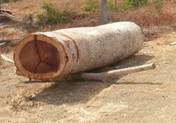
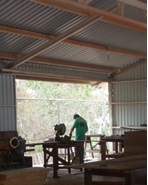
This was also evidenced in the literally hundreds, if not thousands, of small wood working shops that were scattered on seemingly every road. From the larger manufactures in the north where they produce the tables for the Green Egg Barbeque, to small mom and pop facilities near San Juan del Sur, the appetite for raw lumber was seemingly unquenchable. It seemed as though time stood still watching the local workers transform gigantic logs into lumber, utilizing saws that have been at work for decades, and then lumber into finished products. One shop is specializing in cabinets, another in doors, still another in building products and each anxiously awaiting that next delivery of raw logs.
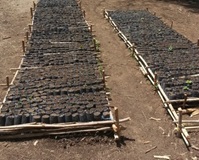
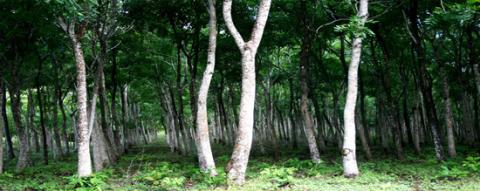
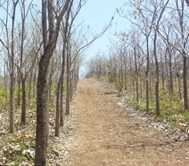
And finally, the reforestation project itself at Maderas Futuro. Expecting to see row upon row of reforested trees, it was astonishing to the actual results. Trees planted on steep hillsides, in deep valleys, on the sides of cliffs; an almost herculean effort to replace trees that had been harvested. Oh there were rows of trees, from saplings waiting to go into the ground to teen age trees nearing harvest; but it was the reforestation of the natural landscape that was most impressive.
Acres of Pochote trees with their spiked bark acting like a natural armor; and what would typically be large-leafed Coaba stand dormant as their roots drive deeper into the soil searching for water in the dry season. Royal cedar trees with their delicate leaves and the fast growing Paulownias seemed to fill every nook and cranny of the hills and valleys.
It's comforting to see a project that is putting product into the ground with a determination equal to that of the local's passion for their products. Reforestation is such a key requirement as the supply of timber fades world-wide while demand is on the rise. Not often, does one find an opportunity to generate profits through a project that is so well aligned with the people and planet. Geography, passion and determination are three reasons to take a closer look at the private timber ownership opportunities at Madera Futuro.
For more information on this project, or to obtain information on how you can participate in private timber ownership send an email to ddrummond@georgetowntrust.com . Isn't it time you started investing from the roots up?


