
Should I Invest in High Technology Metals?
Strong position of Dollar was Yesterday. Tomorrow the Rare High Technology Metals will be in the Strong Position. So investing in Rare Technology Metals will mean investing in the Future.
The modern civilization of our world without Technology Metals is simply no longer feasible.
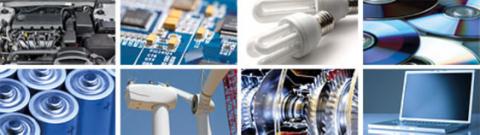
iPad, Smart Phones, Laptops, Energy Saving light Bulbs, Hybrid vehicles, Solar Systems, LED lighting, Flat Panel Displays, Touch Screens, MP3 player, GPS, Laser Technology, Aerospace, Wind Energy, vital Medical Applications for diagnosis and therapy - all no longer possible in our world without the use from Technology Metals.
The European debt crisis as well as the problems in the US has led a large number of investors to lose their Faith in the Banks and move their money into Metals, predominantly Gold and silver. This surge of interest has pushed prices of gold and silver to record highs over the last few years, leading some investors to diversify their Portfolios further to the High Technology Metals. Growing numbers of Investors are turning to the High Technology Metals market as a Safe Haven even for their pension. Traders operating in this sector say the trend will continue and grow as investors look for ways to Keep their Values safely Outside of the Banking System and as high demand from China makes metals an attractive prospect.
- The Minor Metals being bought include Indium, Germanium, Gallium and Hafnium.
- The Rare Earth (REE) being bought include the Oxides of Praseodymium, Neodymium, Yttrium, Gadolinium, Europium and Dysprosium.
But be careful. The unsuspecting investor is often sold inferior goods.
- The success of the investment depends on the highest purity of the products. Therefore the customer always must ensure what MINIMUM QUALITY is guaranteed to him. 99.990% is less than 99.995%. Exactly these small differences are crucial for Technology Metals. So the differences in reality are not small.
- A result of higher quality is a higher price for the production. High quality Minor Metals have to go through more processes to reach 99.995% purity than the merchandise of many competitors to reach only 99.990%. High End Quality is more expensive. But the High End Quality determine whether the investor can sell the metals with high profit in a few years - or not.
- Whoever offers Hafnium with content of soiling zirconium (Zr) of 0.5% (best!) till 3%, sells a bad product to the unsuspecting investor. For most applications, a low Zr content is essential. In the high technology the industry requires very often a maximum of 0.2%. An investor should not accept any Hafnium which contains more than a 0.2% Zr content.
- Pay attention that the merchandise is in its original packaging. A responsible metal dealer
- do not open containers and pour something in order to obtain a specific sale weight or to create standardized baskets for easier marketing. - As a rule, the industry don´t takes off a commodity, whose original packaging has not been preserved.

FREQUENTLY ASKED QUESTIONS
1. What are technology metals?
The term technology metal is a collective term used in finance for such raw materials which have become of great strategic importance for the economies of many countries.
2. What are Rare Earths?
They are components of minerals and ores, have very similar properties and are also classified as economically valuable. A distinction is made between heavy and light rare earths.
3. What makes the raw materials so special?
Some prove to be extremely heat-resistant and resistant; others can conduct heat and electricity very well; or when they are in the solid state are lighter than the liquid. Some in turn have special magnetic or fluorescent properties.
4. What are they used for?
A modern future as we see it, is currently hard to imagine without technology metals and rare earths. Especially companies in the environmental and electrical industry cannot do without them. In Japan, for example, the raw materials are referred to as "vitamins of the industry". Without them there would be no LEDs and young people, for example, would have to give up their smart phones, business people and families give up their laptop and their flat screen TV. There would probably be no hybrid or electric cars, because there would be no batteries. Wind and solar power plants would also be useless. Only with technology metals and rare earths, the required magnets and semi-conductors can be produced. Many other applications such as fuel cells and medical lasers would not exist.
5. Where can we find them?
A good third of previously discovered reserves of rare earths are in China. We have further larger reserves in Australia, Brazil, Greenland, Canada, India, Kazakhstan, the USA and some African countries.
6. Are rare earths really rare?
The name is misleading. Some rare earths are found more than 600 times more common than gold. Theoretically, they exist everywhere on earth. However, the mining is only possible in a few regions where it is economically feasible.
7. How many of the raw materials are needed?
Particularly the industry still needs more and more technology metals and rare earths. In the case of gallium, the European Commission is expecting an increase in the global demand of more than 600 tons by 2030 due to the development of new technologies. The USGS believes that strategic resources are extremely scarce even at a global demand increase of only ten percent per year.
8. Why is the supply limited?
It is very complicated and difficult to separate the individual rare earths from each other. Many technology metals are just a by-product of other raw materials such as aluminum, copper or zinc. Currently the largest shortage is caused by China. Up to 80 percent of the technology metals and up to 97 percent of the rare earths are mined and processed there.
9. What role exactly is China is playing?
The government in Beijing early recognized the potential of raw materials and increased its production capacity. In many western industrialized countries, however, mines and refineries were closed - too expensive, too unprofitable. China's massive export restrictions also aggravate the supply situation. So the export amount of rare earth is steadily reduced through quotas, tariffs and taxes.
10. Will the situation ease soon?
According to the German Institute for Economic Research, in a short to medium term there is not much expectation for a change in China’s monopoly of mining.
11. How critical is the situation?
According to the Institute of Future Research and technology reviews in Berlin, the supply of at least 13 raw materials, necessary for the German economy, is very critical - including gallium, germanium and indium and the rare earths.
12. Are there any substitutes?
Many of the precious resources cannot be substituted at the moment because of their properties or only with significant reductions in quality.
13. And what about recycling?
Rare earths cannot be recycled out of cell phones, computers and catalysts. The yield is very low because only small amounts are being installed.
14. What are the investment opportunities?
Due to the increasing demand and limited supply, raw material experts for many technology metals and rare earths predict a significant price increase for medium to long term.
15. How big are the risks?
Prices may fall just as much as they had previously increased.
Basically the demand depends primarily on the development of the global economy.
16. What impact does politics have?
China's government is currently dictating the market. The prices are therefore at the mercy of political decisions.
17. How can I invest?
Technology metals and rare earths are not traded like gold or copper as futures on the stock market. In the meantime, there are stocks of companies that are looking for the raw materials, to process and promote them. However, now there is a new possibility to physically buy technology metals and rare earths.
18. Why buy physically?
The physical possession of property becomes more important. Property has a real value and will survive inflation, currency reform or state bankruptcy
19. Are there any differences to gold?
The technology metals and rare earths do not have the status of a universal metal crisis currency or replacement currency like gold. This is in part because they are mainly used for industrial purposes.
20. What should I buy?
High technology metals and rare earths which can be used in the future for many new applications and which are difficult to replace are of principle interest. The purchase of physical properties also plays a role.
21. Are there reasonable mixtures?
Those who rely on a number of technology metals and rare earths spread the risk, because the individual prices are not always moving in the same direction.
You can diversify by other applications such as high-tech products, renewable energy and automotive.
22. Where can I find current prices?
Important: There are no quotes like there are for gold or copper.
Instead, prices are negotiated between buyer and seller individually and are not published.
However on the Internet (www.metal-pages.com, for example), it is possible to follow the fluctuation of the approximate prices of different products.
23. Who sells the raw materials?
So far there are only a few companies where private investors can physically acquire high technology metals and rare earths. In Latinamerica we have the distributor “Noble House Group” in Panamá, which cooperates with a leading distributor in Europe.
24. Can I store the raw materials at home?
In the case of some of the technology metals and rare earths that would be quite possible. However, it may not be appropriate. Because investors would not only have to have enough space, but also meet strict safety and environmental regulations. Much easier - and often less expensive - is to store the raw material with a dealer. Above all, it is much safer.
25. How secure is the storage at the dealer?
In general, the technology metals and rare earth elements are stored in special high-security camps, which are equipped with motion sensors and connected to the alarm system of the police.
A German company, partner of Noble House Group in Panama, for example, makes it very safe and uses an old bunker with walls two feet thick, and armed security personnel. The raw materials normally are also insured against theft, fire and embezzlement.
26. What happens in case of bankruptcy of the merchant?
If the dealer goes bankrupt, investors - unlike debt securities such as certificates - should not worry about their (physical) assets.
Because high-tech metals and rare earths acquired are clearly assigned as the owner's property and therefore protected from access by other creditors.
27. What quantities and packages are available?
Especially in the case of technology metals and rare earths, it is important to be able to sell the quantity purchased easily again.
A condition for this is to acquire standardized quantities and packaging. Typical forms of delivery are plastic bottles and bags, steel drums or wooden boxes.
You should buy an amount corresponding to a bowl and let the goods remain in the original packaging.
28. What role does quality play?
At least as important as the packaging, is the quality of the technology metals and rare earths. It is expressed as a percentage of purity and up to three decimals. The higher the value, the better. Example: 99.999% means that that the raw material is contaminated only 0.001 percent with other substances.
29. How can I verify authenticity?
Serious dealers, in their own interest, should only offer "high quality" materials. After all, their customers are industrial companies who are concerned with the quality. Confidence in the dealer is important to them. However, investors should still have a contract saying exactly what raw material was purchased in what quantity and quality, and make sure the dealer is ISO certified.
30. What expenses can occur?
Anyone who buys technology metals and rare earths must expect different costs depending on the provider. It may be necessary to have a so-called price fluctuation reserve, which is a percentage markup on the price obtained when placing the order.
Some dealers want to compensate price fluctuations that may occur until the final order processes.
Excessive money paid is often paid back. Some companies, however, dispense the reserve and instead offer their customers a price guarantee. Noble House Group for example offers a price guarantee of one week: From Wednesday to Tuesday of each week. If you store your technology metals and rare earth elements you must expect an additional annual fee.
31. Are there duties or taxes?
If high-tech metals and rare earths are stored in a bonded warehouse, investors do not have to pay customs duties or sales taxes.
This applies as long as commodities remain there - even if raw materials are only transferred to another owner.
Customs and VAT is paid only in case of physical delivery.
32. How does the sale function?
Each investor determines when, how much and at what price he wants to sell his resources.
A large retailer has the benefit for the investors that he has a network of industrial customers. This increases the potential of sales.
Often, raw materials are returned to the merchant "in stock". But beware: often you have to pay a so called “spread”. The dealer takes a percentage from the sales price.
It is important to inform yourself in advance - and maybe, to negotiate.
33 How can I recognize a good dealer?
A good dealer should primarily have excellent knowledge of the market for technology metals and rare earths, and possess the products themselves.
How is the demand, how is the offer? Which raw materials offer increased potential? Often, companies can rely on many years of experience.
Close contacts with well-known and respected suppliers around the world is an indicator for a good distributor.
This ensures high quality and good availability of raw materials.


