
Living the Mobile Life: How to Feel Instantly Rich
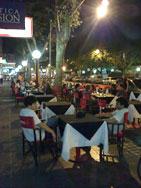
I'm sitting in a sidewalk café in Mendoza, Argentina, at rush hour. Plane trees -- or sycamores, as we North Americans call them -- line the street, reminding me of France. The sidewalk cafés, serving espresso, tiny croissants and fresh-squeezed orange juice, are derived from Italy, as is much of this city's culture and food.
I've come to the café to work, as I often have while living in Mendoza for the past two months. I live in a small, short-term rental apartment with a private terrace near the city center, and when I want to be around people while still taking care of business, I just walk a few blocks to one of the busy cafés so much a part of this city's vibrant street life. Almost all of them now have free wifi, along with old-world charm.
This is my first venture in a new way of life that I call Mobile Living. I'm making it up as I go, and loving the adventure.
I'm far from alone. Before moving to Mendoza, I lived in Panama for five years, and in both countries I've met many expats from North America, Europe, Australia and South America. In fact, I've met more Canadians in Latin America than I ever did when I lived the U.S.
People move abroad for a variety of reasons. Some are retiring. Others expatriating permanently. A few are perpetual travelers.
And some, like me, are none of the above. I'm trying out different countries and cultures. I want to find out how it feels, not just to travel or vacation, but to live in each country that interests me. I take my work with me, settle into a short-term furnished apartment, check out the local groceries, street markets, cafés and restaurants, and meet other people from all over the world.
Divide by Four
Mendoza has been my first stop, and I intend to return after the local version of winter -- average daily high temperatures of 58F and lows of 38F during the coldest months, June and July, with daily sunshine and an occasional snow shower that melts later in the day.
What I love about Mendoza is the blend of charming European architecture, food and café culture, combined with fresh and delicious Argentinean food, and strictly Latin American prices.
In Mendoza, I feel instantly rich. The secret? I get to divide every price by four.
The Argentine peso is trading at roughly four to the dollar. I earn dollars; I spend pesos. The fact that the symbol for the peso is the same as for the dollar -- $ -- confused me at first. Now, I relish dividing every price by four. My brain automatically thinks I'm paying US $6.50 for my espresso, which comes with a complimentary glass of the local sparkling mineral water from the Andes. When I realize that in fact, I'm paying $1.63, I feel instantly rich.
I live very well here. I spend around USD $100 a week to eat -- including groceries, restaurant meals, coffees and snacks.
And I eat out a lot. A few times a week, I have breakfast out. The standard breakfast is a coffee, two or three small croissants with a sweet glaze (called medialunas, or half-moons) and fresh-squeezed orange juice. The price ranges from USD $2.50 to $4.25.
I eat either lunch or dinner out, too. Restaurants offer a fixed menu special everyday, usually costing USD $6.50-10. The low end might be a boneless chicken breast with a sauce, accompanied by salad and bread, and coffee or dessert. Today I chose a high-end lunch special at one of my favorite restaurants: An appetizer of eggplant relish with garlic toasts, two rather thin but tasty T-bone steaks topped with a fried egg, skin-on mashed potatoes garnished with a slice of bacon, and a choice of dessert or coffee. The price tag was USD $10, and I took half the steak and potatoes home for another meal.
Dinners can run more, but not much, and the variety of cuisines and quality are outstanding.
Of course, I don't do my own laundry or cleaning anymore. Not that I think I'm too good to do housework, I just don't have to anymore. In Panama, my housekeeper came in twice a week. She cleaned, cooked, served my meals, did the laundry, made the beds, washed the windows, packed or unpacked my suitcases for me -- just about anything I asked her to do. Living in the U.S., that's an incredible luxury that only the rich enjoy. In Latin America, it's the norm for anyone with a middle-class or higher income. Many have full-time help, in fact, and families with children often have a nanny in addition.
The maid who cleans my Mendoza apartment also takes my laundry with her and returns it clean, ironed and folded the next day. A week's laundry costs me, on average, USD $7.50.
Peak Experiences: The Andes and the Vineyards
Just west of Mendoza, marking the border between Argentina and Chile, the Andes extend north and south in a line of jagged granite peaks. Their color ranges from slate to pink to purple, depending on the angle of the sun. At this time of year, snow already caps the mountains, while I can still wear shorts and sleeveless blouses in the city. The highest peak in the Americas is nearby -- Mount Aconcagua at 22,841 feet.
People say that once you have experienced the Andes, you will always return. They're not just enormous and majestic...they have a powerful presence. Like looking at the ocean, or across the Grand Canyon, looking at the Andes creates a sense of awe.
An hour south of Mendoza, in the Uco Valley where the most sophisticated wines of the region are made, the mountains tower above lush vineyards. People come to Mendoza Province from all over the world to tour the wineries and sample the malbec that is the signature wine of this valley, as well as other varietals.
Expats are drawn to the region by the mountains, the vineyards, the wines and the culture. Some stay to vacation or do business, to make wine or simply live in a vineyard year-round or part-time.
Managed vineyards in the Uco Valley start at $65,000 per acre, including the first two growing seasons of maintenance. Ready-to-build home sites from .6 acres and up, in a new vineyard community with clubhouse, pool, tennis courts, wifi, even winemaking facilities and its own vineyard making super-premium wines for residents, start at under $80,000, with optional rental management available.
Business opportunities abound in the area, as tourism increases. I know a woman from Switzerland who has built a luxurious spa and small hotel between Mendoza and the Uco Valley. Another friend from the U.S. runs a company selling small, managed vineyards to people who can't afford them in California or Europe. Another couple offers gourmet meals and wine-and-chocolate pairings by appointment at their rustic cabin near the foot of the Andes.
Both the Mendocinos and the expats I've met have been very friendly, and I'm a little sad to be leaving already. But it's time to visit family in the States, and then head off to check out life in Europe for a couple of months. I'll share my discoveries with you in future issues of Hemispheres. If you have any questions in the meantime, feel free to write.


